Ernst Barlach Haus, Hamburg:
"EWALD MATARÉ ‘Nothing without Nature’. Animal Sculptures"
June 21 – October 11, 2026
The sculptor Ewald Mataré (1887–1965) starts out as a painter in Berlin, but a stay on the North Sea island of Wangerooge in the summer of 1920 initiates a decisive change of direction. He makes more than a hundred woodcuts, and his experimentation with driftwood opens up the field of sculpture, in which he becomes one of the leading twentieth-century German artistic figures.
As in his woodcuts, animals become a central theme and motif in Mataré’s sculptures. The direct observation of cows during frequent visits to the North Sea and the Baltic is the primary source from which he distils his typically emblematic and abstracted works – Mataré is always in search of new forms for what is ‘essential’. A particular charm of his often small-format objects is the attentive surface treatment of such different materials as zinc, bronze, silver, walnut or ebony.
The fact that Mataré’s elegant stylising formal language not only outlasts National Socialist proscription but is able to make a lasting impact in the young Federal Republic also lies in the success of his teaching at the academy in Düsseldorf. Appointed in 1932, dismissed as ‘degenerate’ in the following year, Mataré is reinstated as professor of sculpture in 1946. His students include Erwin Heerich, Joseph Beuys and Günter Haese.
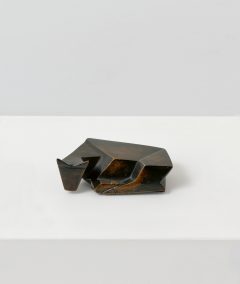
This exhibition, realised in collaboration with the Kunsthaus Dahlem in Berlin and the Museum Lothar Fischer in Neumarkt in der Oberpfalz, presents around seventy sculptures and works on paper from the Museum Kurhaus Kleve – small treasures with great expressive power.