Kunstwerk des Monats:
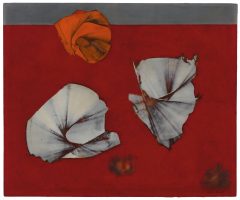
Max Ernst, De but en blanc, 1959
Video

Ein rotes Feld, ein grauer Horizont und drei Formen, die zwischen Realität und Fantasie zu schweben scheinen.
Max Ernst malte unser rätselhafte Werk „De but en blanc“ 1959. Auf den ersten Blick erscheint es simpel: ein tiefrotes Feld, ein schmales graues Band am oberen Rand und drei schwebende Formen in der Mitte. Zwei davon sind blass, fast weiß, und eine leuchtet in leuchtendem Orange. Ernst nannte sie „Muschelblumen“ (fleurs coquillages) – Formen, die mit einem Palettenmesser geschaffen wurden, teils Malerei, teils Skulptur. Die Oberfläche wirkt sowohl kontrolliert als auch spontan. Die Blumen scheinen zu schweben, ungewiss, ob sie blühen oder sich auflösen. Der Titel bedeutet „aus heiterem Himmel“ – etwas Plötzliches, Unerwartetes. So arbeitete Ernst: Er ließ Zufall, Textur und Gestik das Entstehende leiten. Als Begründer des Dadaismus und Pionier des Surrealismus lädt Ernst uns ein, nicht nach Bedeutung zu suchen, sondern einfach nur zu schauen – das Bild sich selbst entfalten zu lassen.
Besuchen Sie uns und studieren Sie diese meisterhafte Arbeit im Original!